People Talk with Loved Ones in the Afterlife through Direct-Voice Mediums

Share this article on social media:

Learn About Your Life . . . and Your Afterlife

The Afterlife Research and Education Institute has created apps with

  • The most compelling evidence that you will live on after your body dies
  • Proof that the end of this life is a painless, easy transition to the next life
  • What everyday life in the afterlife is like
  • How you can communicate with your loved ones in the afterlife
  • What your personality style is and why you have conflict with people in your life

You can go through the apps at https://afterlifeinstitute.org.

The following sample is from the app with the proof you will never die. To see the whole app with 10 lessons full of evidence that you and your loved ones will live together in the afterlife, go to this link: https://youwillneverdie.afterlifeinstitute.org/


People Talk with Loved Ones in the Afterlife through Direct-Voice Mediums

A message from Dr. Hogan
Leslie Flint
Leslie Flint

Direct-voice mediums do not speak for the deceased. They create the conditions in which the deceased person speaks for themselves, in their own recognizable voice, from a location in the room separate from the medium. Leslie Flint, the medium at the center of the cases below, was tested repeatedly by skeptics: his hands and legs strapped down, colored water and surgical tape placed in and over his mouth, a throat microphone recording his own vocal cords. Over thousands of sessions, no fraud was ever found. The voices came anyway.

As you listen to these recordings, notice not just that a voice was heard, but how specific and responsive it was. That specificity — details only two people could know, and the conditions under which the voice appeared — is the heart of the case this lesson makes. A husband, a mother, and a wife all communicated with their loved ones living in the afterlife through Flint many times, demonstrating that they knew without doubt it was their loved one from the afterlife who was talking with them.


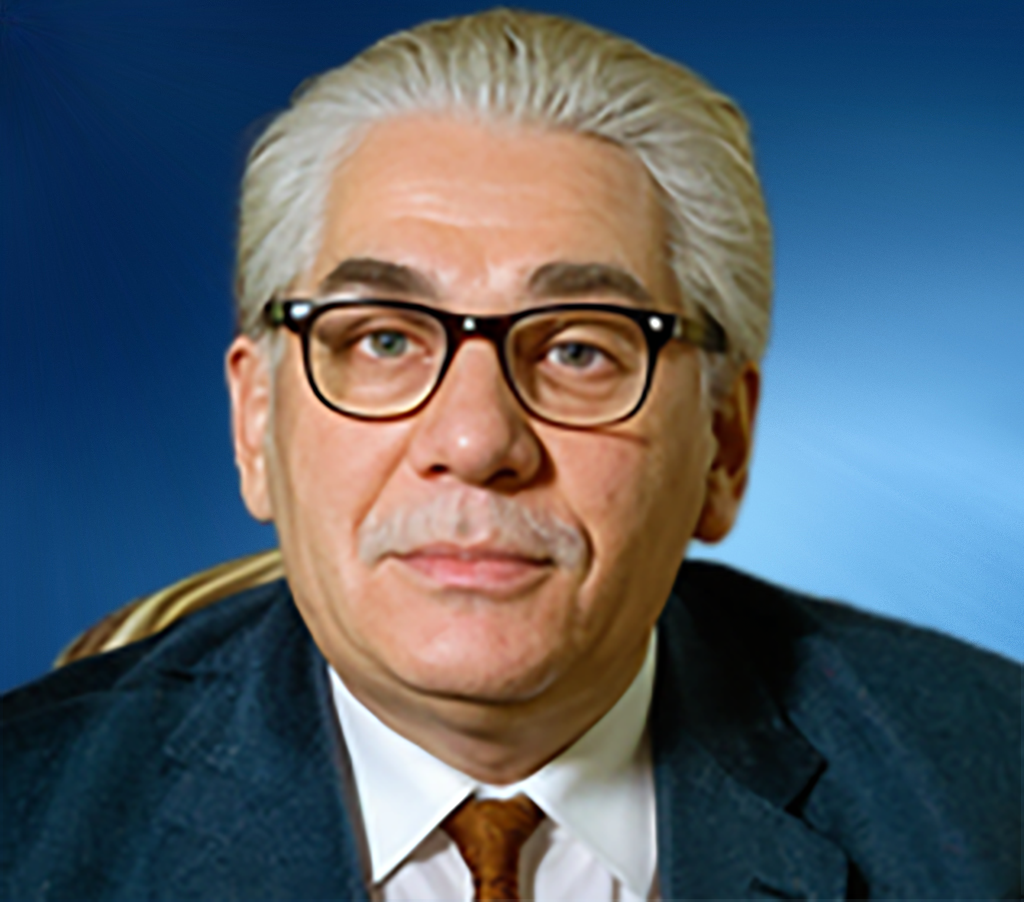
Dr. Dinshaw Nanji Communicates with His Wife, Annie, Living in the Next Life

Dr. Dinshaw Nanji and Annie Nanji

Dr. Dinshaw Nanji was a professor in the Department of Biochemistry of Fermentation at the University of Birmingham in the U.K. His wife, Annie, passed away from cancer in 1966. Beginning in 1970, four years after Annie's death, Dr. Nanji regularly sat with medium Leslie Flint to talk with his wife in spirit. Today, we have the recordings of these sessions. They demonstrate that Annie was very much alive and had full control of her senses and mental faculties, even though her body had died four years before.

In the examples that follow, you will hear the recordings of Annie Nanji, in spirit, speaking to her husband, Dr. Dinshaw Nanji, about normal, everyday things happening in Dr. Nanji's life. The recordings demonstrate that she was alive, with all her mental faculties perfectly intact, as she describes being with Dr. Nanji in the hours and days before Dr. Nanji came to visit Flint. In the first example of this evidence, you will hear Annie's voice as she talks about her ring and a lock of hair that Dr. Nanji has with him at that moment.

The Ring

Annie:You have got my ring in your pocket?

Dr. Nanji:Yes.

Annie:And also this lock of hair?

Dr. Nanji:Yes, everything stays here with me.

Annie:All the various things

Dr. Nanji:Yes, Darling.

Annie:Associated with us two.

There's nothing remarkable about the conversation except that when they had it, the wife had been dead for four years. Surprising? You won't be surprised by the time you finish this lesson. The woman is Annie Nanji. She's speaking to her husband, Dr. Dinshaw Nanji, a professor in the Department of Biochemistry at the University of Birmingham in the UK. The two were happily married until 1966 when Annie passed away from cancer. Dr. Nanji was devastated and wanted to find a way to connect with his Annie. Four years after her passing, he went to a medium named Leslie Flint, who had the remarkable talent of having people now living in the life after this life speak through a voice box made of the fluid from his body called ectoplasm. Dr. Nanji sat in a room with Flint, and after a short time, he heard his wife Annie speaking, just as clearly as if she had been standing in the room with them.

From 1970 to 1983, Dr. Nanji traveled twice a year to sit alone with Flint, and every time, Annie came through — casual, personal, entirely herself. Today we have over two dozen of the full recordings, 45 minutes to an hour long, of Annie and Dr. Nanji talking casually about things happening in their lives.

Annie also comes unseen into Dr. Nanji's flat at night, tapping to tell him she's there:

Tapping

Dr. Nanji:You know, I hear your tapping.

Annie:Good.

Dr. Nanji:And I am surprised at myself that I can hear it.

Annie:I always know when you hear, because you always acknowledge it.

Dr. Nanji:Yes, exactly.

Annie:And you always say, "Thank you, Darling."

Dr. Nanji:Yes, I know.

Annie:And I try again.

Annie tells Dr. Nanji he's wearing an old tattered hat and wants him to get a new one:

The Hat

Dr. Nanji:You know, I don't like to part with anything that you bought.

Annie:I know.

Annie:But you are wearing all those old hats.

Dr. Nanji:Yes.

Annie:And I think you could do with a new hat. I noticed that you keep wearing the same old hat, and I think it is time you have a new one, so you can buy yourself a new hat and say that I bought it for your Christmas.

Dr. Nanji:Thank you.

Annie is with Dr. Nanji unseen much of the day. She talks with him about his clothing, his apartment, where he goes for dinner, and many other trivial things. What her words show is that Annie is very much alive at the time. She has her same personality, wit, voice, and memory of their lives together. She wants Dr. Nanji to put up pictures in a special position in the flat they lived in that he still lives in:

The Pictures

Annie:I don't have to tell you. I am with you constantly. Every day, I come and spend some time with you, especially in the evening when you are quiet in the apartment. Ah, everything is very much the same. You have not altered anything very much. And you're going to put the pictures over the bed.

Dr. Nanji:Yes, darling.

Annie:Just as we would wish, huh?

Dr. Nanji:Yes.

At the next session, six months later, she remarks that she loves the pictures:

Liked the Pictures

Annie:I am so thrilled with the pictures. You have got them in a very good formation. And you know sometimes you see the light around them? I do little things, you know, to try to tell you I am there. Little things.

Dr. Nanji:Yes, I know.

Flint and Dr. Nanji are sitting in the dark because the voice box can't form in the light. So is it fraud? Is Flint taking advantage of Dr. Nanji? Hardly. Flint charged nothing for his demonstrations. He just wanted to bring comfort to people. More importantly, Dr. Nanji sat twice a year for 13 years with Flint, speaking to his wife in spirit. Flint could never have fooled Dr. Nanji into thinking it was his wife speaking if he was miraculously creating a female voice. And Annie talked to Dr. Nanji about things he was actually doing currently — Flint would have known nothing about what Dr. Nanji was doing that day.

Annie went with Dr. Nanji to the cemetery and watched him put flowers on her grave:

The Cemetery

Annie:Why do you still go to the cemetery?

Dr. Nanji:Well, darling, how can I pass your birthday without my…

Annie:I appreciate it, but I'm not there. I'm not there. And I see you go there, and it makes you depressed.

Dr. Nanji:No, no, I'm not depressed. But the fact that I have cleaned it up and put the bushes around.

Annie:I know, I see you, I watch you. The only time I'm ever in the cemetery is when you go there.

Annie saw the gravestone he had put on their grave and kidded him that she couldn't understand why he'd put a stone up with his own name on it, when he wasn't there yet:

The Gravestone

Annie:And you know the gravestone, where you have put your name, but you are not there yet. You are very funny. I have to laugh at you. You have, on the gravestone, you have got my name and date, and now you have got your name, but no date. Because you don't know when you are coming.

Dr. Nanji:No date.

Annie:But you will be able to have the date put in when you are here. There is room for you there. But it seems so strange that you should have already arranged to put your name on the stone when you are not there yet.

Annie was with Dr. Nanji constantly, even at places Flint himself was never present for. She flew with him on a trip and attended a conference lunch, remarking afterward on the tape recorders in the hotel room where he reviewed the recordings:

Tape Recorders

Annie:I was with you when you went to the seaside place. I was with you on the plane. And I was with you when you had lunch. And when you were listening to them and the tapes. And you were talking about all sorts of things, you know. I was very close to you. What a wonderful arrangement it all is. How many tape recorders have you got in that room?

Dr. Nanji:I think the hotel wrote… But they can use only one.

Annie:Uh huh. Why?

Dr. Nanji:Well, they did not have all those tape recorders going at the same time. So I suppose if one is out of order, I think they can always have another.

Annie is in spirit, so she is able to receive Dr. Nanji's thoughts and feelings. She tells him she sees something wrong with a bedspread in one of the beds in the flat:

The Bedspread (Part 1)

Annie:And you haven't changed anything. Everything in the flat is identically the same as when I left it. But there is a difference though, the bed covers. There is something different about the bed covers.

Dr. Nanji:The bed covers, yes. You bought those bed covers, Darling. The yellow ones.

Annie:I know. But have you done something to one of the bed covers?

Dr. Nanji:No, Darling. They're identical.

Annie:Well, perhaps it is that they are the same bed covers, but there is something different. Are you sure you have it the right way round?

Dr. Nanji:I bet not.

Annie:I am certain that is so. Because it doesn't look right.

When Dr. Nanji returns to his flat, he finds one of the bedspreads has been placed on the bed the wrong way. When he returns to Flint six months later, Annie remarks about it again:

The Bedspread (Part 2)

Annie:I see you have made a difference with the spread of the bedspread, haven't you?

Dr. Nanji:Aha, yes Darling. I have even taken photos of the bedspread with half side on the wrong side and half side on the right side.

Annie:Sometimes these silly things are very good because there are things you don't think about and they are important in a way to prove, you know? And that I am near, of course.

Annie is with Dr. Nanji one day as he is walking. He sees a woman who looks just like her, and at their next sitting, Annie brings it up herself, having received his thought and feeling in the moment:

Sees a Woman

Annie:You know the other day, before you come here, you were walking along the street and you saw someone in the distance and it reminded you of me. And for a moment you almost stopped, you know, as if your heart stopped beating. But you knew it was not me in a way, but at the same time she was very like me. Also, the way she moved, walked, you know?

Dr. Nanji:And you know, I thought mentally, yes, she looks like her, but she hasn't got her brain.

Annie:Ah, no, you shouldn't say that. You don't know. She might be highly intelligent. You always think, oh, you are so naughty. This woman was very much like me. I think she probably was highly intelligent.

Annie Nanji lives on after her body died. Dr. Nanji had that proven to him over and over again, sitting after sitting, year after year — recognizing his wife's unique voice, her personality, her memory of their shared life, and her ongoing attention to the small, ordinary details of his days.


Alice Fearon Communicates with Her Son in Spirit

Michael Rodney Fearon (1917-1944)
Michael Rodney Fearon (1917–1944)

Michael Fearon was a biology master at Taunton School in England. He was drafted to serve in the military during World War II. Sadly, he was killed in Normandy in 1944, two weeks after the D-Day invasion. Ten years later, his mother, Alice Fearon, sat with medium Leslie Flint and heard her son's voice again — distinct, unmistakably male, unmistakably his. Sessions occurred regularly between 1954 and 1966, during which Fearon discussed the afterlife and spiritual power and criticized organized religion.

The BBC interviewed Alice Fearon after playing the recording on a broadcast, asking whether she knew she was communicating with her son. She replied, "I ought to know my own son. It was my son." Today, we have thousands of these recordings: sons and daughters talking to parents, spouses talking to each other, parents talking to their children. Only a person living in the life after this life could carry on the extended personal conversations, and they happened repeatedly. In this excerpt from one session, you will hear Michael speaking to his mother and Leslie Flint.

Michael explains that death is nothing to be feared and religion is not important to our eternal lives. What is important is our love and brotherhood with one another. And those coming to us from the life after this life are striving to help humanity live together in love and peace.

The Fearon Recording

Michael Fearon:Satisfactory. I mean, I love coming to talk to you. It's a wonderful opportunity. And it means so much to me, as indeed it does to everybody who has the opportunity to come to us and speak to those who they love on earth.

Mrs. Fearon:I know, and speaking knows it.

Michael Fearon:It would make such a vast difference to people if they understood this and realized that death isn't what they think it is. It isn't the separating of the contact between us.

Mrs. Fearon:There is no death.

Michael Fearon:It's only an illusion. Man has created death in his own mind.


Eira Conacher Talks to Her Husband in Spirit

Douglas Conacher and Wife Eira
Douglas Conacher (died June 6, 1958) and Wife Eira

Another wonderful example of communication from the next life to loved ones on this side of life was the communication between Douglas and Eira Conacher through Leslie Flint.

Douglas and Eira had married later in life. Douglas was 58 when they married, Eira was 39. Douglas transitioned before Eira in 1958. Eira came to Leslie Flint in 1965 to communicate with Douglas and met with Flint 40 times between 1965 and 1967, happily speaking about their lives together. In this recording, Eira begins by asking Douglas if he made a light appear in her room the previous night.

The Conacher Recording

Eira:Was that your light I saw last night?

Douglas:Yes, you know, I'm wondering if you do see as much as I hope you do. I try to attract your attention in various ways and I felt sure… in fact, the other evening, I let sure you realized I was there. You do sense my presence even though you don't see me.

Eira:Yes.

Douglas:You know, sometimes during your sleep you come here… and we're together.

Eira:Yes.

Douglas:We're together a great deal, you know.

Eira:Really? I wish I could remember. I have occasionally remembered.

Douglas:Yes. Have you decided to stay as you are, or what? Are you thinking of making a change?

Eira:Well, you tell me to remain where I am at the moment.

Douglas:Well, yes, that's what I think. I think you would be well advised to stay put and not to make any change for the moment. I don't think there would be much point and it would not be a good idea to do anything drastic.

Eira:Well, I have so many interests.

Douglas:I don't know…

Eira:Yes. Darling, I haven't asked after your favorite cat lately.

Douglas:Oh, he's very well.

Eira:How's he getting on?

Douglas:He's fine. You know, I do love my animals.

Eira:I know. You did love that cat very much.

Douglas:Not as much as I love you!

Eira:No. Well, I'm awfully glad you still love me.

Douglas:Of course I do. I always shall. I'm just waiting for the day for you to join me. The years come and go. Time will pass and we will be together.

Eira:That will be lovely.


These people who have lived normal lives on Earth have left their bodies behind to go on to the life after this life. They were able to return to Earth to speak casually and lovingly with people who knew them well — recognizing the unique voice quality, personality, references to current events, reminiscences of past events, and loving words. Annie, Michael, and Douglas did not die when their bodies died. They remained happy and healthy after leaving their bodies behind, spending time on Earth, unseen, with their loved ones, anytime they wanted to. In the same way, when you leave your body behind, you will not die. You'll be healthier and happier than ever. You'll be able to visit your loved ones when you want to. You will never die.


Why Is This Evidence Beyond a Reasonable Doubt of the Afterlife?

What makes this evidence significant is not simply that a voice was heard, but the conditions under which it was heard and the content of what was said. Leslie Flint was searched, restrained, and monitored using every method available to skeptical investigators of his era — and the voices continued regardless. In case after case, the voice that came through was independently recognized by the person closest to the deceased: a spouse who knew every inflection of a longtime partner's speech, a mother who could not mistake her own son's voice for anyone else's. And the content went beyond generic reassurance. These voices described private family matters no medium could have researched, responded to questions asked only moments before, and reported on real, current events in the sitter's life that no one in the room — including the medium — had any way of knowing. When a claim of fraud requires believing that a single man, searched and restrained, somehow manufactured a second human voice with specific, verifiable knowledge he had no access to, the more reasonable conclusion is the one the sitters themselves reached: they were speaking with someone who had died.

Reflection: Notice how many of these direct-voice cases involve a detail so private, or so ordinary — a hat, a bedspread, a cat — that only the two people involved could have known or cared about it. What do you make of that pattern repeating across unrelated sittings, decades, and mediums?

Direct-voice mediumship is one way the deceased have made themselves heard. In the next lesson, some have gone further still — becoming visible, and in rare and rigorously investigated cases, tangible.

Questions and Topics for Group Discussion

  1. Which of the four recordings (Nanji, Fearon, Conacher, or another) affected you most, and why?
  2. Annie Nanji's messages were often about ordinary things — a hat, a bedspread, a cemetery visit. Do you feel these small details matter more as evidence than grand spiritual statements?
  3. Leslie Flint underwent extensive physical testing to rule out fraud. How much does the testing process change how you weigh this evidence?
  4. If you had the opportunity to sit with a direct-voice medium, what would you hope to hear — and what would convince you it was truly your loved one?
  5. Discuss as a group: what is the difference between wanting something to be true and having good reason to believe it is true? Does that distinction matter here?

Explore Our Other Resources

Afterlife Communication Training — A free guided audio course teaching you to open your own connection with a loved one in the afterlife, with an 86% success rate. Begin the free introduction →

Personality Styles Test and Interpretation — A free 20-question assessment revealing your personality type and why you connect naturally with some people and clash with others. Take the free test →

Summary
People Talk with Loved Ones in the Afterlife through Direct-Voice Mediums
Article Name
People Talk with Loved Ones in the Afterlife through Direct-Voice Mediums
Description
Direct-voice mediums do not speak for the deceased. They create the conditions in which the deceased person speaks for themselves, in their own recognizable voice, from a location in the room separate from the medium. Leslie Flint, the medium at the center of the cases below, was tested repeatedly by skeptics: his hands and legs strapped down, colored water and surgical tape placed in and over his mouth, a throat microphone recording his own vocal cords. Over thousands of sessions, no fraud was ever found. The voices came anyway.
Publisher Name
Seek Reality Online
Publisher Logo

Learn About Your Life . . . and Your Afterlife

The Afterlife Research and Education Institute has created apps with

  • The most compelling evidence that you will live on after your body dies
  • Proof that the end of this life is a painless, easy transition to the next life
  • What everyday life in the afterlife is like
  • How you can communicate with your loved ones in the afterlife
  • What your personality style is and why you have conflict with people in your life

You can go through the apps at https://afterlifeinstitute.org.

The following sample is from the app with the proof you will never die. To see the whole app with 10 lessons full of evidence that you and your loved ones will live together in the afterlife, go to this link: https://youwillneverdie.afterlifeinstitute.org/


People Talk with Loved Ones in the Afterlife through Direct-Voice Mediums

A message from Dr. Hogan

Leslie Flint
Leslie Flint

Direct-voice mediums do not speak for the deceased. They create the conditions in which the deceased person speaks for themselves, in their own recognizable voice, from a location in the room separate from the medium. Leslie Flint, the medium at the center of the cases below, was tested repeatedly by skeptics: his hands and legs strapped down, colored water and surgical tape placed in and over his mouth, a throat microphone recording his own vocal cords. Over thousands of sessions, no fraud was ever found. The voices came anyway.

As you listen to these recordings, notice not just that a voice was heard, but how specific and responsive it was. That specificity — details only two people could know, and the conditions under which the voice appeared — is the heart of the case this lesson makes. A husband, a mother, and a wife all communicated with their loved ones living in the afterlife through Flint many times, demonstrating that they knew without doubt it was their loved one from the afterlife who was talking with them.


Dr. Dinshaw Nanji Communicates with His Wife, Annie, Living in the Next Life

Dr. Dinshaw Nanji and Annie Nanji

Dr. Dinshaw Nanji was a professor in the Department of Biochemistry of Fermentation at the University of Birmingham in the U.K. His wife, Annie, passed away from cancer in 1966. Beginning in 1970, four years after Annie's death, Dr. Nanji regularly sat with medium Leslie Flint to talk with his wife in spirit. Today, we have the recordings of these sessions. They demonstrate that Annie was very much alive and had full control of her senses and mental faculties, even though her body had died four years before.

In the examples that follow, you will hear the recordings of Annie Nanji, in spirit, speaking to her husband, Dr. Dinshaw Nanji, about normal, everyday things happening in Dr. Nanji's life. The recordings demonstrate that she was alive, with all her mental faculties perfectly intact, as she describes being with Dr. Nanji in the hours and days before Dr. Nanji came to visit Flint. In the first example of this evidence, you will hear Annie's voice as she talks about her ring and a lock of hair that Dr. Nanji has with him at that moment.

The Ring

Annie:You have got my ring in your pocket?

Dr. Nanji:Yes.

Annie:And also this lock of hair?

Dr. Nanji:Yes, everything stays here with me.

Annie:All the various things

Dr. Nanji:Yes, Darling.

Annie:Associated with us two.

There's nothing remarkable about the conversation except that when they had it, the wife had been dead for four years. Surprising? You won't be surprised by the time you finish this lesson. The woman is Annie Nanji. She's speaking to her husband, Dr. Dinshaw Nanji, a professor in the Department of Biochemistry at the University of Birmingham in the UK. The two were happily married until 1966 when Annie passed away from cancer. Dr. Nanji was devastated and wanted to find a way to connect with his Annie. Four years after her passing, he went to a medium named Leslie Flint, who had the remarkable talent of having people now living in the life after this life speak through a voice box made of the fluid from his body called ectoplasm. Dr. Nanji sat in a room with Flint, and after a short time, he heard his wife Annie speaking, just as clearly as if she had been standing in the room with them.

From 1970 to 1983, Dr. Nanji traveled twice a year to sit alone with Flint, and every time, Annie came through — casual, personal, entirely herself. Today we have over two dozen of the full recordings, 45 minutes to an hour long, of Annie and Dr. Nanji talking casually about things happening in their lives.

Annie also comes unseen into Dr. Nanji's flat at night, tapping to tell him she's there:

Tapping

Dr. Nanji:You know, I hear your tapping.

Annie:Good.

Dr. Nanji:And I am surprised at myself that I can hear it.

Annie:I always know when you hear, because you always acknowledge it.

Dr. Nanji:Yes, exactly.

Annie:And you always say, "Thank you, Darling."

Dr. Nanji:Yes, I know.

Annie:And I try again.

Annie tells Dr. Nanji he's wearing an old tattered hat and wants him to get a new one:

The Hat

Dr. Nanji:You know, I don't like to part with anything that you bought.

Annie:I know.

Annie:But you are wearing all those old hats.

Dr. Nanji:Yes.

Annie:And I think you could do with a new hat. I noticed that you keep wearing the same old hat, and I think it is time you have a new one, so you can buy yourself a new hat and say that I bought it for your Christmas.

Dr. Nanji:Thank you.

Annie is with Dr. Nanji unseen much of the day. She talks with him about his clothing, his apartment, where he goes for dinner, and many other trivial things. What her words show is that Annie is very much alive at the time. She has her same personality, wit, voice, and memory of their lives together. She wants Dr. Nanji to put up pictures in a special position in the flat they lived in that he still lives in:

The Pictures

Annie:I don't have to tell you. I am with you constantly. Every day, I come and spend some time with you, especially in the evening when you are quiet in the apartment. Ah, everything is very much the same. You have not altered anything very much. And you're going to put the pictures over the bed.

Dr. Nanji:Yes, darling.

Annie:Just as we would wish, huh?

Dr. Nanji:Yes.

At the next session, six months later, she remarks that she loves the pictures:

Liked the Pictures

Annie:I am so thrilled with the pictures. You have got them in a very good formation. And you know sometimes you see the light around them? I do little things, you know, to try to tell you I am there. Little things.

Dr. Nanji:Yes, I know.

Flint and Dr. Nanji are sitting in the dark because the voice box can't form in the light. So is it fraud? Is Flint taking advantage of Dr. Nanji? Hardly. Flint charged nothing for his demonstrations. He just wanted to bring comfort to people. More importantly, Dr. Nanji sat twice a year for 13 years with Flint, speaking to his wife in spirit. Flint could never have fooled Dr. Nanji into thinking it was his wife speaking if he was miraculously creating a female voice. And Annie talked to Dr. Nanji about things he was actually doing currently — Flint would have known nothing about what Dr. Nanji was doing that day.

Annie went with Dr. Nanji to the cemetery and watched him put flowers on her grave:

The Cemetery

Annie:Why do you still go to the cemetery?

Dr. Nanji:Well, darling, how can I pass your birthday without my…

Annie:I appreciate it, but I'm not there. I'm not there. And I see you go there, and it makes you depressed.

Dr. Nanji:No, no, I'm not depressed. But the fact that I have cleaned it up and put the bushes around.

Annie:I know, I see you, I watch you. The only time I'm ever in the cemetery is when you go there.

Annie saw the gravestone he had put on their grave and kidded him that she couldn't understand why he'd put a stone up with his own name on it, when he wasn't there yet:

The Gravestone

Annie:And you know the gravestone, where you have put your name, but you are not there yet. You are very funny. I have to laugh at you. You have, on the gravestone, you have got my name and date, and now you have got your name, but no date. Because you don't know when you are coming.

Dr. Nanji:No date.

Annie:But you will be able to have the date put in when you are here. There is room for you there. But it seems so strange that you should have already arranged to put your name on the stone when you are not there yet.

Annie was with Dr. Nanji constantly, even at places Flint himself was never present for. She flew with him on a trip and attended a conference lunch, remarking afterward on the tape recorders in the hotel room where he reviewed the recordings:

Tape Recorders

Annie:I was with you when you went to the seaside place. I was with you on the plane. And I was with you when you had lunch. And when you were listening to them and the tapes. And you were talking about all sorts of things, you know. I was very close to you. What a wonderful arrangement it all is. How many tape recorders have you got in that room?

Dr. Nanji:I think the hotel wrote… But they can use only one.

Annie:Uh huh. Why?

Dr. Nanji:Well, they did not have all those tape recorders going at the same time. So I suppose if one is out of order, I think they can always have another.

Annie is in spirit, so she is able to receive Dr. Nanji's thoughts and feelings. She tells him she sees something wrong with a bedspread in one of the beds in the flat:

The Bedspread (Part 1)

Annie:And you haven't changed anything. Everything in the flat is identically the same as when I left it. But there is a difference though, the bed covers. There is something different about the bed covers.

Dr. Nanji:The bed covers, yes. You bought those bed covers, Darling. The yellow ones.

Annie:I know. But have you done something to one of the bed covers?

Dr. Nanji:No, Darling. They're identical.

Annie:Well, perhaps it is that they are the same bed covers, but there is something different. Are you sure you have it the right way round?

Dr. Nanji:I bet not.

Annie:I am certain that is so. Because it doesn't look right.

When Dr. Nanji returns to his flat, he finds one of the bedspreads has been placed on the bed the wrong way. When he returns to Flint six months later, Annie remarks about it again:

The Bedspread (Part 2)

Annie:I see you have made a difference with the spread of the bedspread, haven't you?

Dr. Nanji:Aha, yes Darling. I have even taken photos of the bedspread with half side on the wrong side and half side on the right side.

Annie:Sometimes these silly things are very good because there are things you don't think about and they are important in a way to prove, you know? And that I am near, of course.

Annie is with Dr. Nanji one day as he is walking. He sees a woman who looks just like her, and at their next sitting, Annie brings it up herself, having received his thought and feeling in the moment:

Sees a Woman

Annie:You know the other day, before you come here, you were walking along the street and you saw someone in the distance and it reminded you of me. And for a moment you almost stopped, you know, as if your heart stopped beating. But you knew it was not me in a way, but at the same time she was very like me. Also, the way she moved, walked, you know?

Dr. Nanji:And you know, I thought mentally, yes, she looks like her, but she hasn't got her brain.

Annie:Ah, no, you shouldn't say that. You don't know. She might be highly intelligent. You always think, oh, you are so naughty. This woman was very much like me. I think she probably was highly intelligent.

Annie Nanji lives on after her body died. Dr. Nanji had that proven to him over and over again, sitting after sitting, year after year — recognizing his wife's unique voice, her personality, her memory of their shared life, and her ongoing attention to the small, ordinary details of his days.


Alice Fearon Communicates with Her Son in Spirit

Michael Rodney Fearon (1917-1944)
Michael Rodney Fearon (1917–1944)

Michael Fearon was a biology master at Taunton School in England. He was drafted to serve in the military during World War II. Sadly, he was killed in Normandy in 1944, two weeks after the D-Day invasion. Ten years later, his mother, Alice Fearon, sat with medium Leslie Flint and heard her son's voice again — distinct, unmistakably male, unmistakably his. Sessions occurred regularly between 1954 and 1966, during which Fearon discussed the afterlife and spiritual power and criticized organized religion.

The BBC interviewed Alice Fearon after playing the recording on a broadcast, asking whether she knew she was communicating with her son. She replied, "I ought to know my own son. It was my son." Today, we have thousands of these recordings: sons and daughters talking to parents, spouses talking to each other, parents talking to their children. Only a person living in the life after this life could carry on the extended personal conversations, and they happened repeatedly. In this excerpt from one session, you will hear Michael speaking to his mother and Leslie Flint.

Michael explains that death is nothing to be feared and religion is not important to our eternal lives. What is important is our love and brotherhood with one another. And those coming to us from the life after this life are striving to help humanity live together in love and peace.

The Fearon Recording

Michael Fearon:Satisfactory. I mean, I love coming to talk to you. It's a wonderful opportunity. And it means so much to me, as indeed it does to everybody who has the opportunity to come to us and speak to those who they love on earth.

Mrs. Fearon:I know, and speaking knows it.

Michael Fearon:It would make such a vast difference to people if they understood this and realized that death isn't what they think it is. It isn't the separating of the contact between us.

Mrs. Fearon:There is no death.

Michael Fearon:It's only an illusion. Man has created death in his own mind.


Eira Conacher Talks to Her Husband in Spirit

Douglas Conacher and Wife Eira
Douglas Conacher (died June 6, 1958) and Wife Eira

Another wonderful example of communication from the next life to loved ones on this side of life was the communication between Douglas and Eira Conacher through Leslie Flint.

Douglas and Eira had married later in life. Douglas was 58 when they married, Eira was 39. Douglas transitioned before Eira in 1958. Eira came to Leslie Flint in 1965 to communicate with Douglas and met with Flint 40 times between 1965 and 1967, happily speaking about their lives together. In this recording, Eira begins by asking Douglas if he made a light appear in her room the previous night.

The Conacher Recording

Eira:Was that your light I saw last night?

Douglas:Yes, you know, I'm wondering if you do see as much as I hope you do. I try to attract your attention in various ways and I felt sure… in fact, the other evening, I let sure you realized I was there. You do sense my presence even though you don't see me.

Eira:Yes.

Douglas:You know, sometimes during your sleep you come here… and we're together.

Eira:Yes.

Douglas:We're together a great deal, you know.

Eira:Really? I wish I could remember. I have occasionally remembered.

Douglas:Yes. Have you decided to stay as you are, or what? Are you thinking of making a change?

Eira:Well, you tell me to remain where I am at the moment.

Douglas:Well, yes, that's what I think. I think you would be well advised to stay put and not to make any change for the moment. I don't think there would be much point and it would not be a good idea to do anything drastic.

Eira:Well, I have so many interests.

Douglas:I don't know…

Eira:Yes. Darling, I haven't asked after your favorite cat lately.

Douglas:Oh, he's very well.

Eira:How's he getting on?

Douglas:He's fine. You know, I do love my animals.

Eira:I know. You did love that cat very much.

Douglas:Not as much as I love you!

Eira:No. Well, I'm awfully glad you still love me.

Douglas:Of course I do. I always shall. I'm just waiting for the day for you to join me. The years come and go. Time will pass and we will be together.

Eira:That will be lovely.


These people who have lived normal lives on Earth have left their bodies behind to go on to the life after this life. They were able to return to Earth to speak casually and lovingly with people who knew them well — recognizing the unique voice quality, personality, references to current events, reminiscences of past events, and loving words. Annie, Michael, and Douglas did not die when their bodies died. They remained happy and healthy after leaving their bodies behind, spending time on Earth, unseen, with their loved ones, anytime they wanted to. In the same way, when you leave your body behind, you will not die. You'll be healthier and happier than ever. You'll be able to visit your loved ones when you want to. You will never die.


Why Is This Evidence Beyond a Reasonable Doubt of the Afterlife?

What makes this evidence significant is not simply that a voice was heard, but the conditions under which it was heard and the content of what was said. Leslie Flint was searched, restrained, and monitored using every method available to skeptical investigators of his era — and the voices continued regardless. In case after case, the voice that came through was independently recognized by the person closest to the deceased: a spouse who knew every inflection of a longtime partner's speech, a mother who could not mistake her own son's voice for anyone else's. And the content went beyond generic reassurance. These voices described private family matters no medium could have researched, responded to questions asked only moments before, and reported on real, current events in the sitter's life that no one in the room — including the medium — had any way of knowing. When a claim of fraud requires believing that a single man, searched and restrained, somehow manufactured a second human voice with specific, verifiable knowledge he had no access to, the more reasonable conclusion is the one the sitters themselves reached: they were speaking with someone who had died.

Reflection: Notice how many of these direct-voice cases involve a detail so private, or so ordinary — a hat, a bedspread, a cat — that only the two people involved could have known or cared about it. What do you make of that pattern repeating across unrelated sittings, decades, and mediums?

Direct-voice mediumship is one way the deceased have made themselves heard. In the next lesson, some have gone further still — becoming visible, and in rare and rigorously investigated cases, tangible.

Questions and Topics for Group Discussion

  1. Which of the four recordings (Nanji, Fearon, Conacher, or another) affected you most, and why?
  2. Annie Nanji's messages were often about ordinary things — a hat, a bedspread, a cemetery visit. Do you feel these small details matter more as evidence than grand spiritual statements?
  3. Leslie Flint underwent extensive physical testing to rule out fraud. How much does the testing process change how you weigh this evidence?
  4. If you had the opportunity to sit with a direct-voice medium, what would you hope to hear — and what would convince you it was truly your loved one?
  5. Discuss as a group: what is the difference between wanting something to be true and having good reason to believe it is true? Does that distinction matter here?

Explore Our Other Resources

Afterlife Communication Training — A free guided audio course teaching you to open your own connection with a loved one in the afterlife, with an 86% success rate. Begin the free introduction →

Personality Styles Test and Interpretation — A free 20-question assessment revealing your personality type and why you connect naturally with some people and clash with others. Take the free test →

Summary
People Talk with Loved Ones in the Afterlife through Direct-Voice Mediums
Article Name
People Talk with Loved Ones in the Afterlife through Direct-Voice Mediums
Description
Direct-voice mediums do not speak for the deceased. They create the conditions in which the deceased person speaks for themselves, in their own recognizable voice, from a location in the room separate from the medium. Leslie Flint, the medium at the center of the cases below, was tested repeatedly by skeptics: his hands and legs strapped down, colored water and surgical tape placed in and over his mouth, a throat microphone recording his own vocal cords. Over thousands of sessions, no fraud was ever found. The voices came anyway.
Publisher Name
Seek Reality Online
Publisher Logo

Join now

Become a member

Join Seek Reality Online and You will get access to our premium content