People from the Afterlife Speak through Mental Mediums

Share this article on social media:

How to choose a qualified medium

Learn About Your Life . . . and Your Afterlife

The Afterlife Research and Education Institute has created apps with

  • The most compelling evidence that you will live on after your body dies
  • Proof that the end of this life is a painless, easy transition to the next life
  • What everyday life in the afterlife is like
  • How you can communicate with your loved ones in the afterlife
  • What your personality style is and why you have conflict with people in your life

You can go through the apps at https://afterlifeinstitute.org.

The following sample is from the app with the proof you will never die. To see the whole app with 10 lessons full of evidence that you and your loved ones will live together in the afterlife, go to this link: https://youwillneverdie.afterlifeinstitute.org/


People from the Afterlife Speak through Mental Mediums

A message from Dr. Hogan

Mental mediumship — in which a medium perceives information through impression rather than trance or physical phenomena — has been the most extensively laboratory-tested form of this evidence. The studies below were specifically designed with the kind of controls a skeptical scientist would demand: blinding, randomization, and statistical analysis.

As you read about these studies, notice how each one was designed to close off one more ordinary explanation, from cold reading to chance to the medium picking up cues from the sitter. That progression is the heart of the case this lesson makes.


Mediums Have Been Given Messages that Only Make Sense When Taken Together
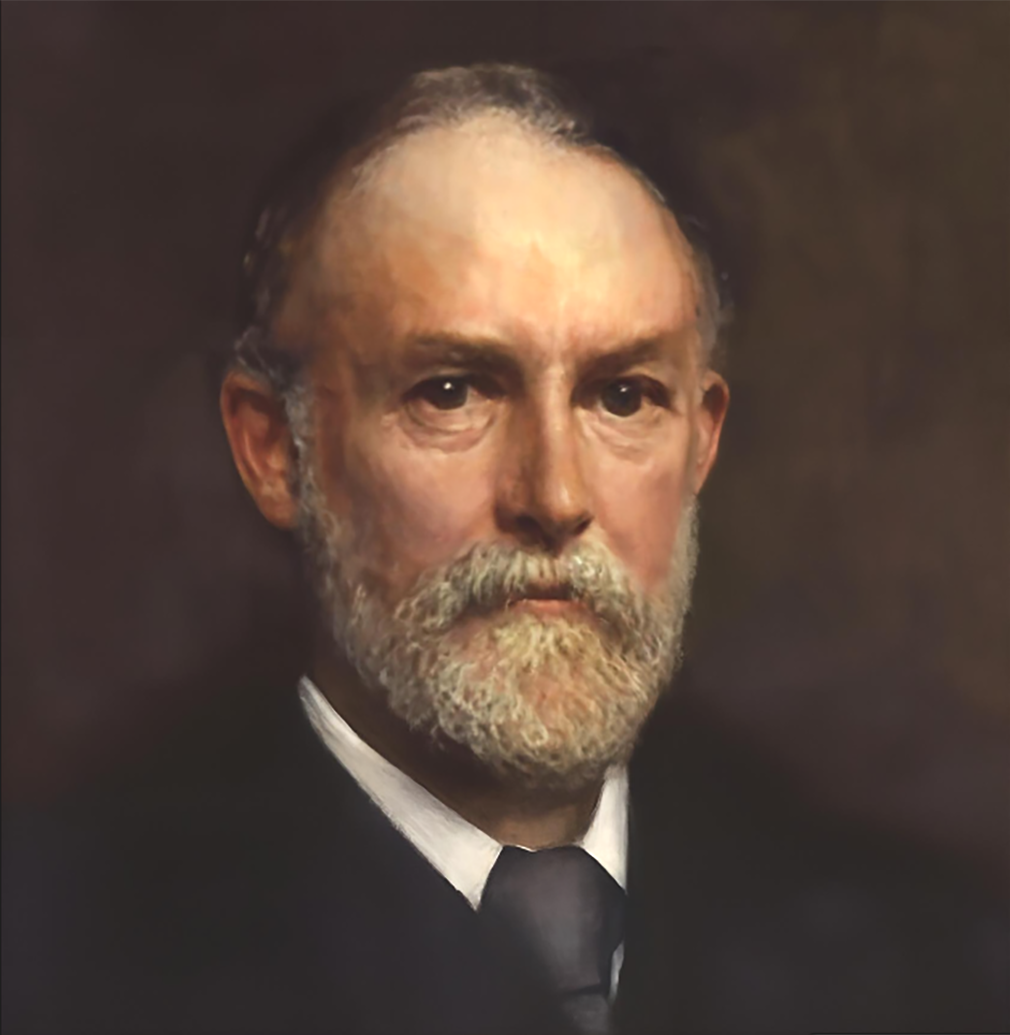
Frederick W.H. Myers

More objective proof that the mediums are speaking to living people in the life after this life comes from research called “cross correspondence.” In cross correspondence, a series of messages is given by someone in the life after this life to different mediums in various parts of the world. Individually, the messages are not meaningful, but together they have a clear message. That means a single medium couldn't be receiving psychic information. Instead, the person living in the life after this life has carefully planned to give the messages to a number of mediums.

Frederick W.H. Myers was a Cambridge classic scholar and writer in the 19th century and one of the founders of the Society for Psychical Research. After he transitioned to the afterlife, over a dozen mediums in different countries began receiving incomplete scripts through automatic writing that were all signed by Myers. When brought together, they formed a coherent message.

Cross correspondence overview

The Myers Cross Correspondence is the best known example of a study intended to prove that mental mediums receive messages from people now living in the afterlife. Frederick W.H. Myers was a Cambridge classic scholar and writer in the 19th century, who was one of the founders of the Society for Psychical Research. He originated the concept of Cross Correspondence.

After Myers transitioned from Earth, over a dozen mediums in different countries began receiving incomplete scripts through automatic writing that were all signed by Myers. The scripts were all about obscure classical subjects that would have been known to Myers, a classics scholar. When all the scripts were assembled, like piecing together a jigsaw puzzle, they formed a complete message.

Myers, living in the life after this life and communicating through the mediums, had planned and executed the writings while in the afterlife so they would prove no single medium was receiving psychic knowledge rather than communication from a deceased person. Later, two other leaders of the Society for Psychical Research transitioned into the afterlife.

Henry Sidgwick, and Edmund Gurney. Soon after each of their transitions, fragments of messages came to mediums around the world from them. The Myers study was replicated successfully. Over the next thirty years, more than three thousand such scripts were transmitted to mediums around the world, some as long as forty typed pages.

They now fill 24 volumes of 12,000 pages. As investigators involved in the research died and entered the afterlife, they joined the study on the other side by communicating incomplete messages through a number of mediums around the world that formed complete wholes when brought together.

Hundreds of other accounts of such cross-correspondence are recorded in the Proceedings of the Society for Psychical Research.


Canyon Ranch Experiments
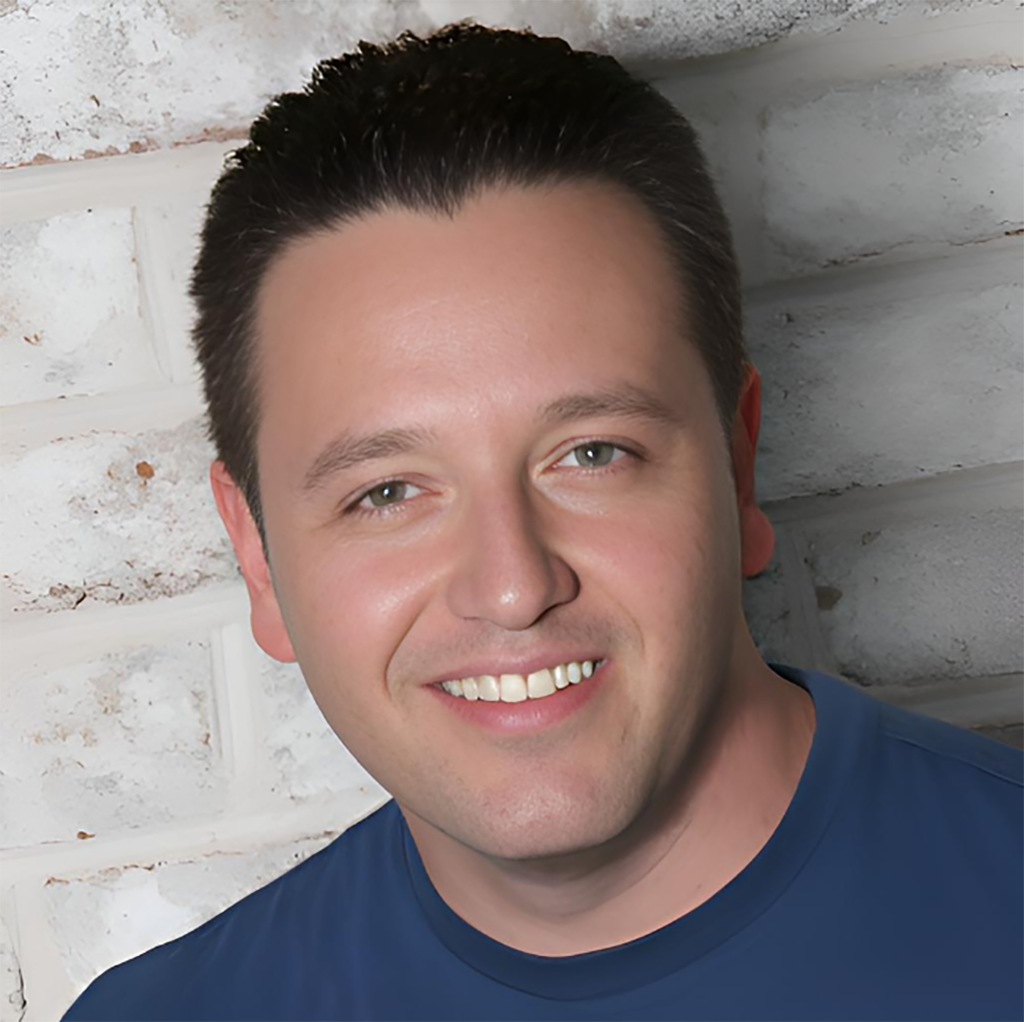
Medium John Edwards
Medium John Edwards

Conducted at the Canyon Ranch research facility under the direction of Dr. Gary Schwartz, these experiments had mediums provide information about deceased individuals to sitters whose identity and loss history were completely unknown to them — with the mediums separated from sitters and unable to use any conventional cues. The accuracy rates reported significantly exceeded what chance guessing or cold reading could explain.

In an effort to run a controlled experiment to determine whether mediums do receive accurate information from the deceased, Schwartz, along with Linda Russek and Christopher Barentsen, conducted the study for the Human Energy Systems Laboratory at the University of Arizona, testing three talented mediums: Laurie Campbell, John Edward, and Suzane Northrop. The study revealed that the mediums identified details about the deceased loved ones at a rate much higher than chance, leading the researchers to conclude that 'The findings appear to confirm the hypothesis that information and energy, and potentially consciousness itself, can continue after physical death.'

However, the statistics don't adequately show the remarkable accuracy of the mediums and the personal nature of the communications with a deceased loved one. Listen to the account of a remarkable reading by medium John Edward.

John Edward's Reading

During the Canyon Ranch medium experiments, one medium, John Edward, reported that he was receiving information from a deceased grandmother for one of the people being read. He reported that the grandmother brought daisies to the person's mother's wedding. The grandmother had a large black poodle and large white poodle, and the white poodle tore up the house. Those and other details were perfectly accurate.

John Edward had 70% perfect hit scores for that person. But when the next person came in for John Edward to read, he received a zero hit score, because the grandmother of the previous person persisted in coming through, and he couldn't read for the next person. He kept hearing the songs on the good ship Lollipop and Sabrina the Teenage Witch.

After the zero-hit reading was over, the experimenter took the person being read back to the waiting room, and there was the woman whose grandmother kept coming through to John Edward, still waiting for the next medium. The experimenter asked her whether she knew anything about On the Good Ship Lollipop or Sabrina the Teenage Witch.

She emotionally told the experimenter that she had curly brown hair as a child and sang and danced Shirley Temple songs with her grandmother. One of the songs was “On the Good Ship Lollipop.” Also, her name was Sabrina, and when she was a teenager, some children teased her about being “Sabrina the Teenage Witch,” and she went to her grandmother for solace.

John Edward knew nothing about the girl, including her name and gender.


Study for an HBO Documentary
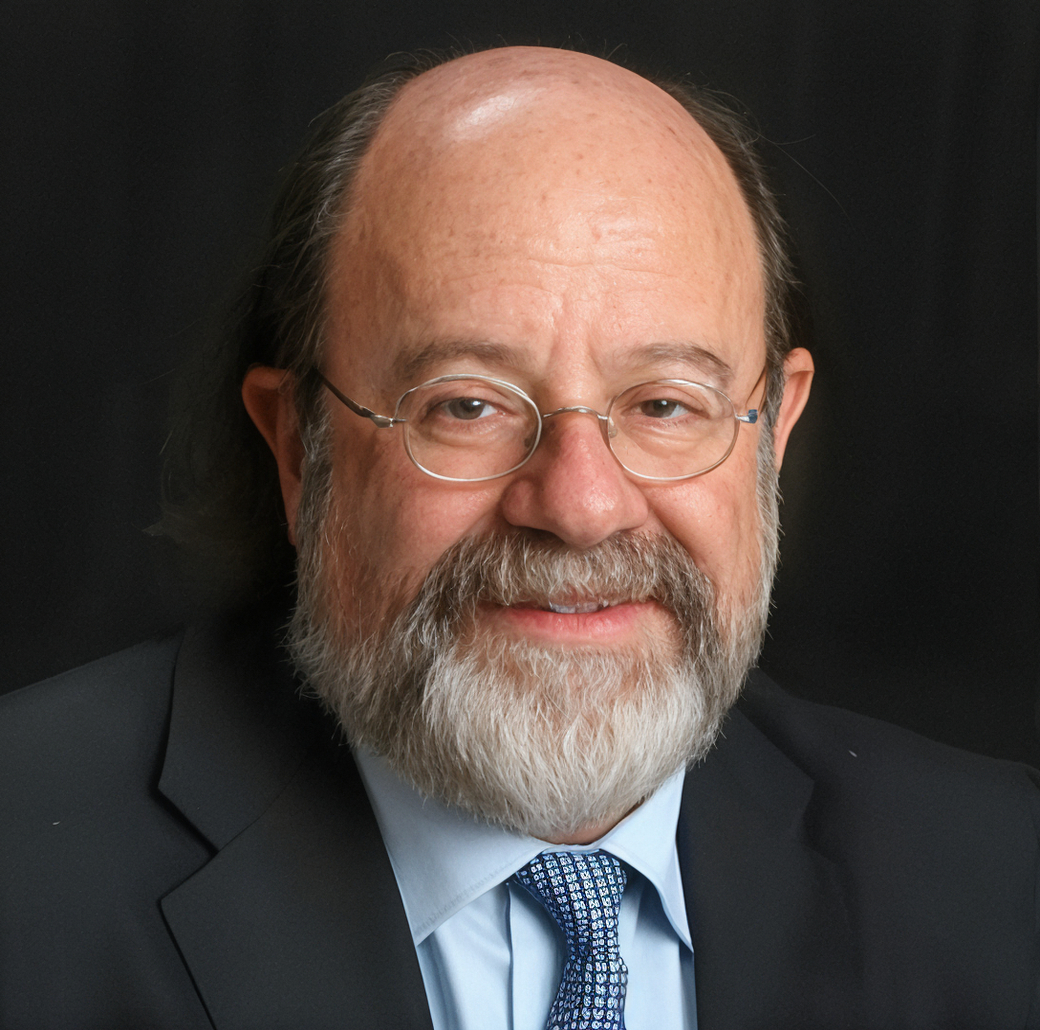
Dr. Gary Schwartz
Dr. Gary Schwartz

A second study was performed by Gary Schwartz with three other researchers from the University of Arizona Human Energy Systems Laboratory for a video-recorded HBO documentary on the life after this life. The study used five well-known mediums: George Anderson, John Edward, Anne Gehman, Suzane Northrop, and Laurie Campbell.

The study applied similarly rigorous double-blind conditions: mediums provided readings for sitters they never saw or heard, with independent judges later matching transcripts to the correct sitter at rates far above chance — a design specifically constructed to eliminate the cold-reading explanations skeptics typically raise.

HBO documentary study overview

This carefully designed study was intended to learn whether mediums can really get messages from dead people. In the study, two people were subjects for the medium sessions, one of whom had experienced six significant deaths over the previous ten years. Before the readings, each person wrote descriptions of the people who had died to provide objective data that could be compared to the medium's readings.

The mediums had no knowledge of the two people. Each subject sat behind a screen, so the subject couldn't be seen by the medium giving a reading. The person was able to give only yes and no answers. Two video cameras recorded the sessions, and verbatim scripts were made.

The result was that the medium's average accuracy score was 83% for subject 1 and 77% for subject 2. To test whether guessing could achieve the same results by chance, 68 control people were asked to guess details about the deceased loved ones of the two subjects. Their scores averaged 36% hits by chance.

In other words, the accuracy of the medium's details was far beyond chance guesses.


The Miraval Silent-Sitter Experiment
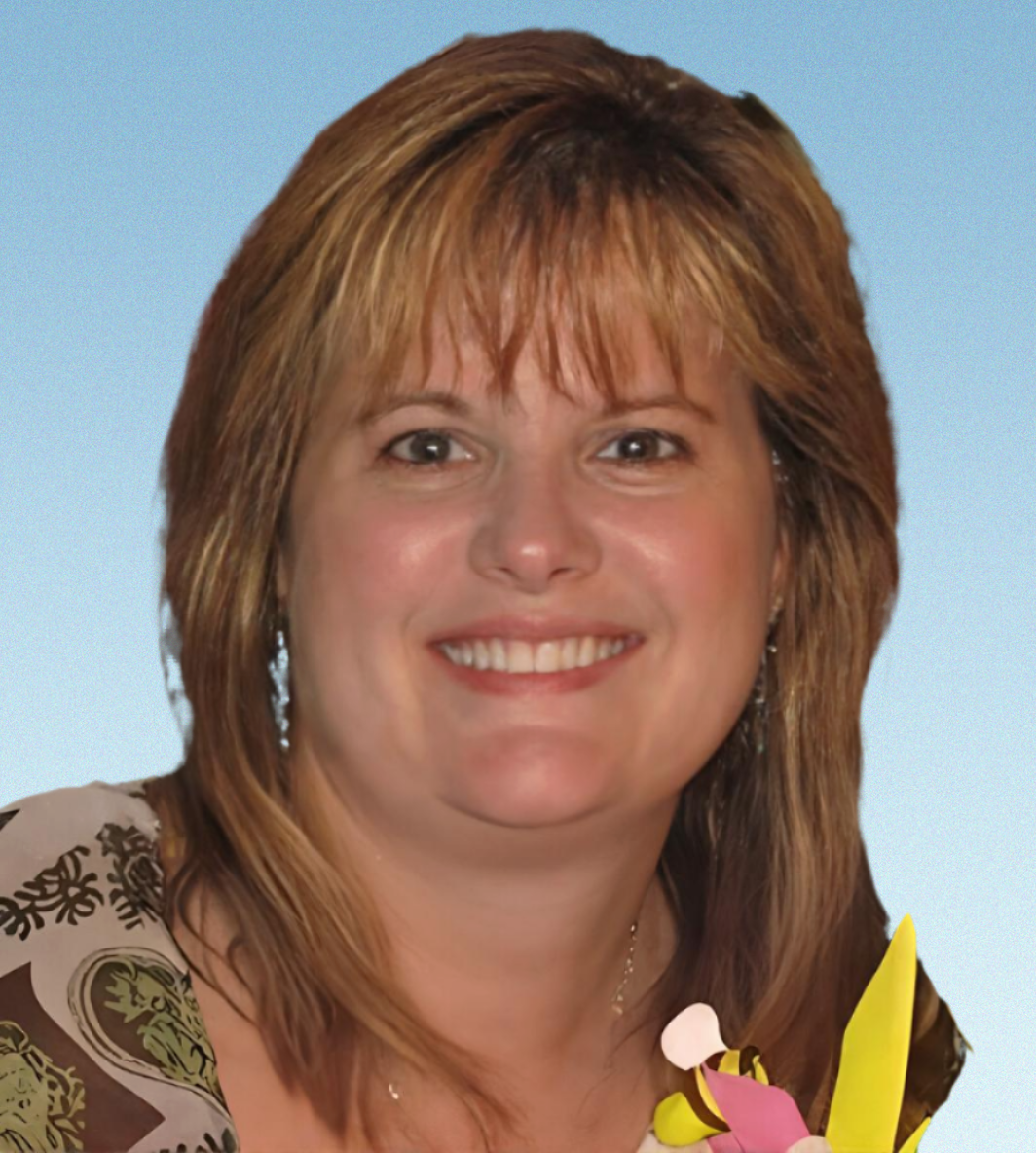
Medium Laurie Campbell

In this especially rigorous design, sitters remained completely silent throughout the reading — giving no verbal or nonverbal feedback of any kind — removing even the possibility that a medium was unconsciously picking up cues from the sitter's reactions. Mediums nonetheless produced specific, verifiable information about the sitters' deceased loved ones.

The study was conducted as ongoing research into after-life communication. In the study, the person being read sat quietly out of the medium's direct line of sight (positioned six feet behind). The experimental design was intended to test whether mediums could still relay accurate, specific information about deceased relatives without hearing the client's voice, seeing facial expressions, or receiving accidental feedback (cold reading). Mediums tested were Suzanne Northrup, John Edward, Anne Geeman, and Laurie Campbell.

Miraval silent-sitter overview

The experimenters wanted to be sure mediums don't pick up on anything the person being read is doing, such as smiling, laughing, grimacing, or other action that might cue the medium on what to say to the person being read. That is called a cold reading. A study called the Miraval Silent Sitter experiment was designed to eliminate the possibility the mediums might be reacting to cues from the person being read.

In the Miraval Silent Sitter experiment, the mediums were Suzanne Northrup, John Edward, Anne Geeman, and Laurie Campbell. There were ten subjects. The study involved two parts for each reading with each subject.

The first was a silent part in which the medium described details about the deceased without receiving any responses from the subject. In the second part, the medium received yes and no answers from the subject. In this study, the medium's accuracy score was 77% during the silent period and 85% during the yes and no questioning period, showing again that the mediums were far more accurate than would be expected by chance.

A control group of people with no medium abilities was given the same information and procedures as the mediums to see how accurate someone guessing might be at providing details. The control group had only a 36% accuracy rating, which is what would be expected from pure chance.


More Stringent Studies at the University of Arizona
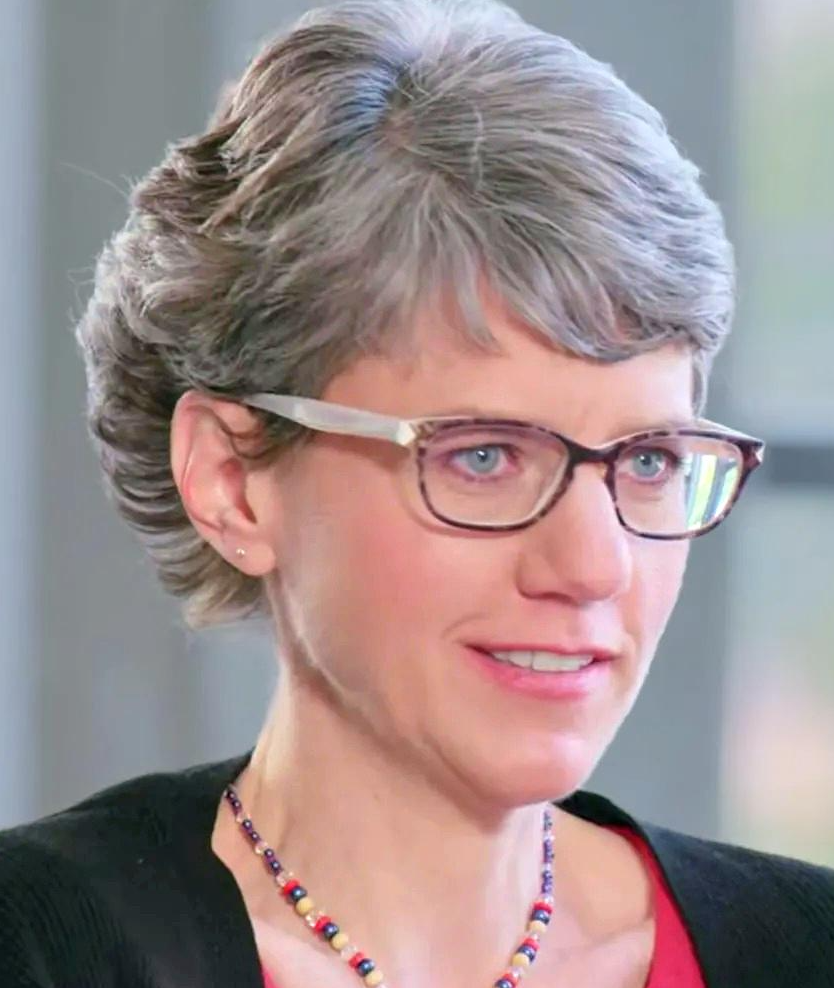
Dr. Julie Beischel
Dr. Julie Beischel

Gary Schwartz, PhD, and Julie Beischel, PhD, of the University of Arizona performed another study under even more stringent, triple-blind conditions with more mediums. It is apparent that the mediums are learning information about the deceased, but the question arises whether the medium is just using telepathy or clairvoyance to learn information from the person being read rather than really hearing from the deceased. This study added a condition to eliminate that possibility. In this later study, the subjects weren't present for the reading. Another person sat in as a 'proxy sitter.' The readings were conducted by phone to eliminate even the presence of the proxy sitter with the medium. Eight mediums were involved to increase the validity of the data.

Follow-up studies at the University of Arizona tightened the controls still further, addressing nearly every methodological criticism raised against the earlier experiments. The results were consistent with the earlier findings: information accuracy well beyond chance, under conditions that left researchers unable to identify a conventional explanation.

University of Arizona studies overview

This new design was especially rigorous, to show beyond a reasonable doubt that the mediums communicate with people alive and well in the afterlife. In this study, transcripts of the readings were made, and the subjects, whose deceased loved ones were to come through, rated the readings on a scale of zero to six, with zero being no accuracy, and six being perfect accuracy on all details. They were given transcripts of both readings intended for them, and readings intended for other subjects, without knowing which was which, to see whether they would score the reading intended for them as being more accurate than a random reading for some other person.

The result was that for three of the best-performing mediums, the summary scores were in the range of 5.0 to 5.5 out of six, meaning they were dramatically accurate, up to 92 percent. In other words, the study showed that mediums in controlled conditions, that included not even speaking on the phone with the person being read, resulted in communication with the deceased.


Why Is This Evidence Beyond a Reasonable Doubt of the Afterlife?

What sets mental mediumship apart from every other category of evidence in this course is that it has been tested under conditions designed specifically by scientists to eliminate every conventional explanation, one at a time. The cross correspondence experiments alone required no single medium to be trusted — the messages Myers, Sidgwick, and Gurney sent were deliberately fragmented across a dozen mediums on different continents who had no contact with one another, and only made sense when independently assembled, ruling out both fraud and telepathy between living people as an explanation.

The subsequent studies removed every remaining alternative explanation one at a time. The HBO documentary study placed a screen between medium and sitter so no visual cues were possible, and still produced accuracy rates more than double what 68 control subjects achieved by guessing. The Miraval experiment went further, keeping sitters completely silent so mediums could not even rely on vocal feedback, and still saw accuracy climb as high as 85 percent. The final University of Arizona study eliminated the sitter's presence entirely — conducting readings by phone through a proxy, so the medium and the actual grieving person never interacted at all — and the top mediums still scored above 90 percent accuracy on details meant specifically for people they had never spoken to.

Each study was designed by scientists whose explicit purpose was to find the ordinary explanation — cold reading, cuing, coincidence — and each successive layer of control failed to make the results disappear. When accuracy holds up after visual cues are removed, then audio and behavioral cues are removed, then the sitter's presence itself is removed, the pattern that remains is not one that guessing or unconscious inference can account for. What remains is a channel of communication that continues to function no matter how thoroughly researchers try to close it off.

Reflection: Laboratory studies trade the emotional power of an individual story for the discipline of controlled testing. Which kind of evidence do you personally find more convincing — and why?

Waking encounters and laboratory sittings are not the only place connection has been documented. For many people, the first and most frequent contact with a deceased loved one comes while they are asleep.

Questions and Topics for Group Discussion

  1. Cross correspondence relies on messages that only make sense when pieced together from mediums who never communicated with each other. What does that kind of coordination suggest to you about who is doing the planning?
  2. The studies in this lesson moved from Canyon Ranch, to an HBO documentary, to phone-only proxy sittings, to complete silence from the sitter — each removing one more possible explanation. Which of these controls do you find most convincing, and why?
  3. Statistics can show that mediums perform far better than chance, but they can't capture what it feels like to hear a message meant for you. How do you weigh a personal account like John Edward's reading against a study's numbers?
  4. Several of these researchers, including Gary Schwartz, built entire careers studying this question rigorously rather than dismissing it outright. What do you think it takes for a scientist to take on a topic like this seriously?
  5. If you could design one more experiment to rule out every remaining doubt about mental mediums, what would it look like?

Explore Our Other Resources

Afterlife Communication Training — A free guided audio course teaching you to open your own connection with a loved one in the afterlife, with an 86% success rate. Begin the free introduction →

Personality Styles Test and Interpretation — A free 20-question assessment revealing your personality type and why you connect naturally with some people and clash with others. Take the free test →

Summary
People from the Afterlife Speak through Mental Mediums
Article Name
People from the Afterlife Speak through Mental Mediums
Description
Mental mediumship — in which a medium perceives information through impression rather than trance or physical phenomena — has been the most extensively laboratory-tested form of this evidence. The studies below were specifically designed with the kind of controls a skeptical scientist would demand: blinding, randomization, and statistical analysis.
Publisher Name
Seek Reality Online
Publisher Logo
How to choose a qualified medium

Learn About Your Life . . . and Your Afterlife

The Afterlife Research and Education Institute has created apps with

  • The most compelling evidence that you will live on after your body dies
  • Proof that the end of this life is a painless, easy transition to the next life
  • What everyday life in the afterlife is like
  • How you can communicate with your loved ones in the afterlife
  • What your personality style is and why you have conflict with people in your life

You can go through the apps at https://afterlifeinstitute.org.

The following sample is from the app with the proof you will never die. To see the whole app with 10 lessons full of evidence that you and your loved ones will live together in the afterlife, go to this link: https://youwillneverdie.afterlifeinstitute.org/


People from the Afterlife Speak through Mental Mediums

A message from Dr. Hogan

Mental mediumship — in which a medium perceives information through impression rather than trance or physical phenomena — has been the most extensively laboratory-tested form of this evidence. The studies below were specifically designed with the kind of controls a skeptical scientist would demand: blinding, randomization, and statistical analysis.

As you read about these studies, notice how each one was designed to close off one more ordinary explanation, from cold reading to chance to the medium picking up cues from the sitter. That progression is the heart of the case this lesson makes.


Mediums Have Been Given Messages that Only Make Sense When Taken Together

Frederick W.H. Myers

More objective proof that the mediums are speaking to living people in the life after this life comes from research called “cross correspondence.” In cross correspondence, a series of messages is given by someone in the life after this life to different mediums in various parts of the world. Individually, the messages are not meaningful, but together they have a clear message. That means a single medium couldn't be receiving psychic information. Instead, the person living in the life after this life has carefully planned to give the messages to a number of mediums.

Frederick W.H. Myers was a Cambridge classic scholar and writer in the 19th century and one of the founders of the Society for Psychical Research. After he transitioned to the afterlife, over a dozen mediums in different countries began receiving incomplete scripts through automatic writing that were all signed by Myers. When brought together, they formed a coherent message.

Cross correspondence overview

The Myers Cross Correspondence is the best known example of a study intended to prove that mental mediums receive messages from people now living in the afterlife. Frederick W.H. Myers was a Cambridge classic scholar and writer in the 19th century, who was one of the founders of the Society for Psychical Research. He originated the concept of Cross Correspondence.

After Myers transitioned from Earth, over a dozen mediums in different countries began receiving incomplete scripts through automatic writing that were all signed by Myers. The scripts were all about obscure classical subjects that would have been known to Myers, a classics scholar. When all the scripts were assembled, like piecing together a jigsaw puzzle, they formed a complete message.

Myers, living in the life after this life and communicating through the mediums, had planned and executed the writings while in the afterlife so they would prove no single medium was receiving psychic knowledge rather than communication from a deceased person. Later, two other leaders of the Society for Psychical Research transitioned into the afterlife.

Henry Sidgwick, and Edmund Gurney. Soon after each of their transitions, fragments of messages came to mediums around the world from them. The Myers study was replicated successfully. Over the next thirty years, more than three thousand such scripts were transmitted to mediums around the world, some as long as forty typed pages.

They now fill 24 volumes of 12,000 pages. As investigators involved in the research died and entered the afterlife, they joined the study on the other side by communicating incomplete messages through a number of mediums around the world that formed complete wholes when brought together.

Hundreds of other accounts of such cross-correspondence are recorded in the Proceedings of the Society for Psychical Research.


Canyon Ranch Experiments

Medium John Edwards
Medium John Edwards

Conducted at the Canyon Ranch research facility under the direction of Dr. Gary Schwartz, these experiments had mediums provide information about deceased individuals to sitters whose identity and loss history were completely unknown to them — with the mediums separated from sitters and unable to use any conventional cues. The accuracy rates reported significantly exceeded what chance guessing or cold reading could explain.

In an effort to run a controlled experiment to determine whether mediums do receive accurate information from the deceased, Schwartz, along with Linda Russek and Christopher Barentsen, conducted the study for the Human Energy Systems Laboratory at the University of Arizona, testing three talented mediums: Laurie Campbell, John Edward, and Suzane Northrop. The study revealed that the mediums identified details about the deceased loved ones at a rate much higher than chance, leading the researchers to conclude that 'The findings appear to confirm the hypothesis that information and energy, and potentially consciousness itself, can continue after physical death.'

However, the statistics don't adequately show the remarkable accuracy of the mediums and the personal nature of the communications with a deceased loved one. Listen to the account of a remarkable reading by medium John Edward.

John Edward's Reading

During the Canyon Ranch medium experiments, one medium, John Edward, reported that he was receiving information from a deceased grandmother for one of the people being read. He reported that the grandmother brought daisies to the person's mother's wedding. The grandmother had a large black poodle and large white poodle, and the white poodle tore up the house. Those and other details were perfectly accurate.

John Edward had 70% perfect hit scores for that person. But when the next person came in for John Edward to read, he received a zero hit score, because the grandmother of the previous person persisted in coming through, and he couldn't read for the next person. He kept hearing the songs on the good ship Lollipop and Sabrina the Teenage Witch.

After the zero-hit reading was over, the experimenter took the person being read back to the waiting room, and there was the woman whose grandmother kept coming through to John Edward, still waiting for the next medium. The experimenter asked her whether she knew anything about On the Good Ship Lollipop or Sabrina the Teenage Witch.

She emotionally told the experimenter that she had curly brown hair as a child and sang and danced Shirley Temple songs with her grandmother. One of the songs was “On the Good Ship Lollipop.” Also, her name was Sabrina, and when she was a teenager, some children teased her about being “Sabrina the Teenage Witch,” and she went to her grandmother for solace.

John Edward knew nothing about the girl, including her name and gender.


Study for an HBO Documentary

Dr. Gary Schwartz
Dr. Gary Schwartz

A second study was performed by Gary Schwartz with three other researchers from the University of Arizona Human Energy Systems Laboratory for a video-recorded HBO documentary on the life after this life. The study used five well-known mediums: George Anderson, John Edward, Anne Gehman, Suzane Northrop, and Laurie Campbell.

The study applied similarly rigorous double-blind conditions: mediums provided readings for sitters they never saw or heard, with independent judges later matching transcripts to the correct sitter at rates far above chance — a design specifically constructed to eliminate the cold-reading explanations skeptics typically raise.

HBO documentary study overview

This carefully designed study was intended to learn whether mediums can really get messages from dead people. In the study, two people were subjects for the medium sessions, one of whom had experienced six significant deaths over the previous ten years. Before the readings, each person wrote descriptions of the people who had died to provide objective data that could be compared to the medium's readings.

The mediums had no knowledge of the two people. Each subject sat behind a screen, so the subject couldn't be seen by the medium giving a reading. The person was able to give only yes and no answers. Two video cameras recorded the sessions, and verbatim scripts were made.

The result was that the medium's average accuracy score was 83% for subject 1 and 77% for subject 2. To test whether guessing could achieve the same results by chance, 68 control people were asked to guess details about the deceased loved ones of the two subjects. Their scores averaged 36% hits by chance.

In other words, the accuracy of the medium's details was far beyond chance guesses.


The Miraval Silent-Sitter Experiment

Medium Laurie Campbell

In this especially rigorous design, sitters remained completely silent throughout the reading — giving no verbal or nonverbal feedback of any kind — removing even the possibility that a medium was unconsciously picking up cues from the sitter's reactions. Mediums nonetheless produced specific, verifiable information about the sitters' deceased loved ones.

The study was conducted as ongoing research into after-life communication. In the study, the person being read sat quietly out of the medium's direct line of sight (positioned six feet behind). The experimental design was intended to test whether mediums could still relay accurate, specific information about deceased relatives without hearing the client's voice, seeing facial expressions, or receiving accidental feedback (cold reading). Mediums tested were Suzanne Northrup, John Edward, Anne Geeman, and Laurie Campbell.

Miraval silent-sitter overview

The experimenters wanted to be sure mediums don't pick up on anything the person being read is doing, such as smiling, laughing, grimacing, or other action that might cue the medium on what to say to the person being read. That is called a cold reading. A study called the Miraval Silent Sitter experiment was designed to eliminate the possibility the mediums might be reacting to cues from the person being read.

In the Miraval Silent Sitter experiment, the mediums were Suzanne Northrup, John Edward, Anne Geeman, and Laurie Campbell. There were ten subjects. The study involved two parts for each reading with each subject.

The first was a silent part in which the medium described details about the deceased without receiving any responses from the subject. In the second part, the medium received yes and no answers from the subject. In this study, the medium's accuracy score was 77% during the silent period and 85% during the yes and no questioning period, showing again that the mediums were far more accurate than would be expected by chance.

A control group of people with no medium abilities was given the same information and procedures as the mediums to see how accurate someone guessing might be at providing details. The control group had only a 36% accuracy rating, which is what would be expected from pure chance.


More Stringent Studies at the University of Arizona

Dr. Julie Beischel
Dr. Julie Beischel

Gary Schwartz, PhD, and Julie Beischel, PhD, of the University of Arizona performed another study under even more stringent, triple-blind conditions with more mediums. It is apparent that the mediums are learning information about the deceased, but the question arises whether the medium is just using telepathy or clairvoyance to learn information from the person being read rather than really hearing from the deceased. This study added a condition to eliminate that possibility. In this later study, the subjects weren't present for the reading. Another person sat in as a 'proxy sitter.' The readings were conducted by phone to eliminate even the presence of the proxy sitter with the medium. Eight mediums were involved to increase the validity of the data.

Follow-up studies at the University of Arizona tightened the controls still further, addressing nearly every methodological criticism raised against the earlier experiments. The results were consistent with the earlier findings: information accuracy well beyond chance, under conditions that left researchers unable to identify a conventional explanation.

University of Arizona studies overview

This new design was especially rigorous, to show beyond a reasonable doubt that the mediums communicate with people alive and well in the afterlife. In this study, transcripts of the readings were made, and the subjects, whose deceased loved ones were to come through, rated the readings on a scale of zero to six, with zero being no accuracy, and six being perfect accuracy on all details. They were given transcripts of both readings intended for them, and readings intended for other subjects, without knowing which was which, to see whether they would score the reading intended for them as being more accurate than a random reading for some other person.

The result was that for three of the best-performing mediums, the summary scores were in the range of 5.0 to 5.5 out of six, meaning they were dramatically accurate, up to 92 percent. In other words, the study showed that mediums in controlled conditions, that included not even speaking on the phone with the person being read, resulted in communication with the deceased.


Why Is This Evidence Beyond a Reasonable Doubt of the Afterlife?

What sets mental mediumship apart from every other category of evidence in this course is that it has been tested under conditions designed specifically by scientists to eliminate every conventional explanation, one at a time. The cross correspondence experiments alone required no single medium to be trusted — the messages Myers, Sidgwick, and Gurney sent were deliberately fragmented across a dozen mediums on different continents who had no contact with one another, and only made sense when independently assembled, ruling out both fraud and telepathy between living people as an explanation.

The subsequent studies removed every remaining alternative explanation one at a time. The HBO documentary study placed a screen between medium and sitter so no visual cues were possible, and still produced accuracy rates more than double what 68 control subjects achieved by guessing. The Miraval experiment went further, keeping sitters completely silent so mediums could not even rely on vocal feedback, and still saw accuracy climb as high as 85 percent. The final University of Arizona study eliminated the sitter's presence entirely — conducting readings by phone through a proxy, so the medium and the actual grieving person never interacted at all — and the top mediums still scored above 90 percent accuracy on details meant specifically for people they had never spoken to.

Each study was designed by scientists whose explicit purpose was to find the ordinary explanation — cold reading, cuing, coincidence — and each successive layer of control failed to make the results disappear. When accuracy holds up after visual cues are removed, then audio and behavioral cues are removed, then the sitter's presence itself is removed, the pattern that remains is not one that guessing or unconscious inference can account for. What remains is a channel of communication that continues to function no matter how thoroughly researchers try to close it off.

Reflection: Laboratory studies trade the emotional power of an individual story for the discipline of controlled testing. Which kind of evidence do you personally find more convincing — and why?

Waking encounters and laboratory sittings are not the only place connection has been documented. For many people, the first and most frequent contact with a deceased loved one comes while they are asleep.

Questions and Topics for Group Discussion

  1. Cross correspondence relies on messages that only make sense when pieced together from mediums who never communicated with each other. What does that kind of coordination suggest to you about who is doing the planning?
  2. The studies in this lesson moved from Canyon Ranch, to an HBO documentary, to phone-only proxy sittings, to complete silence from the sitter — each removing one more possible explanation. Which of these controls do you find most convincing, and why?
  3. Statistics can show that mediums perform far better than chance, but they can't capture what it feels like to hear a message meant for you. How do you weigh a personal account like John Edward's reading against a study's numbers?
  4. Several of these researchers, including Gary Schwartz, built entire careers studying this question rigorously rather than dismissing it outright. What do you think it takes for a scientist to take on a topic like this seriously?
  5. If you could design one more experiment to rule out every remaining doubt about mental mediums, what would it look like?

Explore Our Other Resources

Afterlife Communication Training — A free guided audio course teaching you to open your own connection with a loved one in the afterlife, with an 86% success rate. Begin the free introduction →

Personality Styles Test and Interpretation — A free 20-question assessment revealing your personality type and why you connect naturally with some people and clash with others. Take the free test →

Summary
People from the Afterlife Speak through Mental Mediums
Article Name
People from the Afterlife Speak through Mental Mediums
Description
Mental mediumship — in which a medium perceives information through impression rather than trance or physical phenomena — has been the most extensively laboratory-tested form of this evidence. The studies below were specifically designed with the kind of controls a skeptical scientist would demand: blinding, randomization, and statistical analysis.
Publisher Name
Seek Reality Online
Publisher Logo

Join now

Become a member

Join Seek Reality Online and You will get access to our premium content