You Will Never Die!

This Course Will Give You the Proof

Area 1 — Proof Your Loved One Is Alive and Well in the Afterlife

The Afterlife Research and Education Institute has created apps with:

You can go through the apps at https://afterlifeinstitute.org. The following sample is from the app with the proof you will never die. To see the whole app with 10 lessons full of evidence that you and your loved ones will live together in the afterlife, go to this link: https://youwillneverdie.afterlifeinstitute.org/

Dead People Appear and Speak to People Who Knew Them

Introduction to Lesson 5

The cases in this lesson are different from séance communications. These are not sittings arranged in advance, with a medium present to facilitate contact. These are spontaneous encounters — deceased individuals appearing, unbidden, to people going about their ordinary lives. What makes these cases especially compelling is who they happened to: not credulous mystics, but physicians, psychiatrists, and clergy trained to be skeptical of exactly this kind of experience.

As you read these accounts, notice who is telling them: people whose training was to doubt exactly this kind of experience, describing it anyway, in careful and specific detail. That combination — expert skepticism meeting vivid personal experience — is the heart of the case this lesson makes.

Elisabeth Kübler-Ross Experiences a Materialization

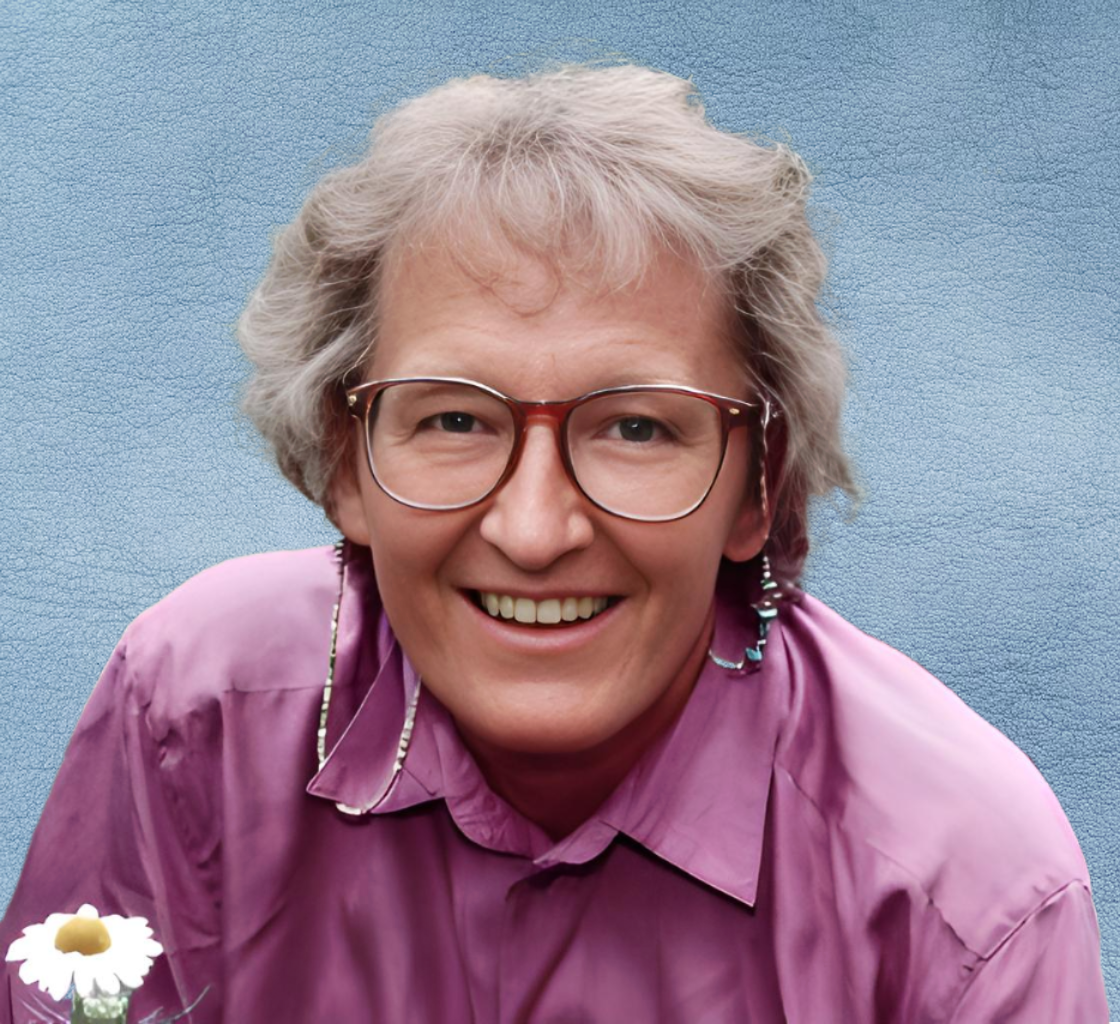
Elisabeth Kübler-Ross
Elisabeth Kübler-Ross, the Swiss-American psychiatrist who was an expert on death and dying, reshaped how medicine treats the dying and was not a woman prone to fantasy. She was listed as one of the 100 most important thinkers of the 20th century by Time magazine in 1999, received 20 honorary degrees, published 20 books on death and dying, and was included in the list of the foremost women of the 20th century. Yet she recounted, in her own writing and lectures, an encounter with a former patient — a woman who had died nearly a year earlier — who appeared to her clearly enough that Kübler-Ross spoke with her, touched her, and later confirmed the encounter had left a written note in the patient’s own hand. Kübler-Ross said the experience changed the course of her research, pushing her from studying the dying toward studying what may lie beyond death itself.
The Kübler-Ross account

In her own words:

“I was at a crossroad. I felt I needed to give up my work with dying patients. That day, I was determined to give notice and leave the hospital and the University of Chicago. It wasn’t an easy decision because I really love my patients. I walked out of my last seminar on death and dying towards the elevator. At that moment, a woman walked towards me. She had an incredible smile on her face like she knew every thought I had. She said, ‘Dr. Ross, I’m only going to take two minutes of your time. If you don’t mind, I’ll walk you down to your office.’ It was the longest walk I have ever taken in my life. One part of me knew this was Mrs. Schwartz, a patient of mine who had died and been buried almost a year ago. But I’m a scientist, and I don’t believe in ghosts and spooks. I did the most incredible reality testing I’ve ever done. I tried to touch her because she looked transparent in a waxy way. Not that you could see furniture behind her, but not quite real either. I know I touched her, and she had feeling to her.”

“We came to my office and she opened the door. We went inside and she said, ‘I had to come back for two reasons. Number one, I wanted to thank you and Reverend Smith once more for what you have done for me. But the real reason why I had to come back is to tell you not to give up your work on death and dying. Not yet.’ I realized consciously that maybe indeed this was Mrs. Schwartz. But I thought nobody would ever believe me if I told this to anybody. They really would think I had flipped. So my scientist in me very truly looked at her and said, ‘You know Reverend Smith would be thrilled if he would have a note from you. Would you terribly mind?’ You understand that the scientist in me needed proof. I needed a sheet of paper with anything written in her handwriting, and hopefully, her signature. This woman knew my thoughts and knew I had no intention to ever give her note to Reverend Smith. However, she took a piece of paper and wrote a message and signed it with her name. Then, with the biggest smile of love and compassion and understanding, she said to me, ‘Are you satisfied now?'”

“Once more, she said, ‘You cannot give up your work on death and dying. Not yet. The time is not right. We will help you. You will know when the time is right. Do you promise?’ The last thing I said to her was, ‘I promise.’ And with that, she walked out. No sooner was the door closed, I had to go and see if she was real. I opened the door, and there was not a soul in that long hallway.”

Mrs. Schwartz was alive, healthy, and articulate. She appeared in a body Dr. Kübler-Ross recognized immediately. Dr. Kübler-Ross was able to touch her. Mrs. Schwartz thanked Dr. Kübler-Ross for taking care of her, proving it was she who materialized. She knew what Dr. Kübler-Ross had been thinking and intending to do. All of that proved that Mrs. Schwartz continued to live after her body died and was still living when she met with Dr. Kübler-Ross. She did not die with the body, just as you can be assured you will not die when you leave your body behind.

Raymond A. Moody Experiences and Speaks with His Deceased Grandmother

Dr. Raymond Moody
Raymond Moody, the physician and researcher who coined the term ‘near-death experience,’ spent his career collecting other people’s accounts of encounters with the deceased. Later in his life, he described his own: a vivid, sustained visit from his grandmother, so clear in its physical and conversational detail that Moody — a man who had spent decades cataloguing and cautiously analyzing thousands of similar reports from others — treated his own experience with the same evidentiary seriousness he had always urged on his readers.
The Moody account

In her own words:

“It is very difficult to put this experience into language. I am at a loss to explain some of it in words. Yet, I have no doubt whatsoever that I was in the presence of my deceased grandmother for an extended period and did in fact converse with her at length. At first, as I said, I did not recognize this person, though she immediately seemed somehow familiar. She looked somewhat as had while alive on the Earth, but appeared younger than she had been even when I was born. When I recognized her as my grandmother and confronted her with this fact, she immediately acknowledged it and began to use the nickname she alone had used for me when I was a child. She talked with me about events only my grandmother and I knew. She imparted to me certain very personal information about my early life that has been quite important and revealing. I might add that the relationship between me and my paternal grandmother had been rather difficult while she was alive. Yet, our meeting enabled us to smooth things over. I now see her humor and appreciate her as a person in a brand new way.”

“I look forward to meeting her again when I make my transition. I can attest that my own visit with my grandmother was radically different from anything I have experienced during my two decades of familiarity with hypnosis.”

Dr. Moody’s grandmother appeared to him and conversed with him, even though her body had been dead for years. These visitations, described by eminently qualified, highly regarded professionals, demonstrate that we continue to live after the body dies, and we will be able to visit people we love who are still on Earth. You will never die.

Rev. John Bertram Phillips Experiences a Materialization of C. S. Lewis

J. B. Phillips
C. S. Lewis
J. B. Phillips, the Anglican clergyman and Bible translator, recorded one of the most well-known cases of its kind: an encounter, weeks after C. S. Lewis’s death, in which Lewis appeared to him — vividly, and on more than one occasion — offering counsel in a manner Phillips recognized instantly as Lewis’s own voice and turn of mind. Phillips, a careful and theologically conservative man not given to embellishment, wrote about the experience candidly, aware of how it might be received, because he judged it too significant to leave out of his own record.
The Phillips account

“Many of us who believe in what is technically known as the Communion of Saints must have experienced the sense of nearness for a fairly short time for those whom we love, soon after they have died. This has certainly happened to me several times. But the late C. S. Lewis, whom I did not know very well and had only seen in the flesh once, but with whom I had corresponded a fair amount, gave me an unusual experience. A few days after his death, while I was watching television, he appeared sitting in a chair within a few feet of me and spoke a few words which were particularly relevant to the difficult circumstances through which I was passing. He was ruddier in complexion than ever, grinning all over his face and, as the old-fashioned saying has it, positively glowing with health. The interesting thing to me was that I had not been thinking about him at all. I was neither alarmed nor surprised nor to satisfy the Bishop of Woollich did I look up to see the hole in the ceiling that he might have made on arrival. He was just there, large as life and twice as natural.”


“A week later, this time when I was in bed, reading before going to sleep, he appeared again, even more rosily, radiant than before, and repeated to me the same message, which was important to me at the time. I was a little puzzled by this, and I mentioned it to a certain saintly bishop who was then living in retirement here in Dorset. His reply was, ‘My dear Jay, this thing is happening all the time.'”

C. S. Lewis was alive with a complexion that was ruddier than ever. He spoke clearly and gave Phillips a word of wisdom that released Phillips from his depression. The testimony by this accomplished clergyman who translated a version of the Christian Bible demonstrates that the visitation was real. It shows that we continue to live after the body dies, and we can visit people on Earth who are of importance to us.

Why Is This Evidence Beyond a Reasonable Doubt of the Afterlife?

The proof in this lesson does not come from any special testing conditions — these encounters happened spontaneously, with no equipment, no medium, and no advance arrangement of any kind. It comes instead from the character of the witnesses themselves. Elisabeth Kübler-Ross, Raymond Moody, and J. B. Phillips were not people inclined to see what they wanted to see. Their professional lives were built on evaluating evidence carefully: Kübler-Ross as a psychiatrist studying the dying, Moody as a physician cataloguing thousands of other people’s accounts with deliberate caution, Phillips as a theologically conservative clergyman and translator whose reputation depended on precision and restraint. Each of them had every professional incentive to stay silent about an experience that risked their credibility — and each chose to record it anyway, in specific, sensory detail: a hand that was touched, a note left in a dead woman’s own handwriting, a voice recognized instantly as belonging to a particular person, conversation held on more than one occasion. These are not vague impressions reported by people eager to believe. They are precise, repeatable, and personally costly admissions from people whose careers depended on getting this kind of judgment right. When the most careful observers available report the same kind of encounter independently of one another, the more difficult position is not that they experienced what they said — it is explaining why three unrelated experts, across different fields and different eras, would all be equally and specifically wrong in the same way.
Reflection: Each of these three witnesses had spent their professional life examining evidence — medical, psychological, or theological. What difference does it make to you that people trained to be skeptical experienced this themselves?

Spontaneous encounters cannot be summoned on demand. But in recent decades, researchers and grief counselors have developed structured methods that appear to make connection more accessible — not guaranteed, but far more available than most people realize.

Questions and Topics for Group Discussion

  • Unlike a séance, these encounters were never arranged in advance. Does the spontaneous nature of these three cases make them more or less convincing to you than the arranged sittings in earlier lessons?
  • Kübler-Ross, Moody, and Phillips each had a professional reputation that could have been damaged by sharing these accounts. What weight do you give to a credible expert choosing to speak anyway, at some personal risk?
  • Kübler-Ross asked for a handwritten note as proof. Why might that kind of physical, verifiable detail matter so much in an account like this?
  • Phillips described being neither alarmed nor surprised by Lewis’s appearance — only recognizing him. What do you make of that calm reaction rather than shock or fear?
  • If someone you love appeared to you the way these three describe, what would you most want them to say?

You Can Be Part of Helping Humanity Change.

Your support helps bring this work to everyone suffering from fear of death or grief over the passing of a loved one.

If the Afterlife Research and Education Institute’s work means something to you, please support it with $6 a month or $65 per year or another donation amount you specify.

You can go through the other nine lessons in this app at https://youwillneverdie.afterlifeinstitute.org. The Afterlife Research and Education Institute has created apps with
You can go through the apps at https://afterlifeinstitute.org.